
The short version
- Four different numbers answer to "what my house is worth", and they can sit far apart without any of them being wrong.
- Only one of them turns into money: what a buyer will actually sign for. The rest are estimates, opinions, or artefacts of tax law.
- In California the assessed value on your tax bill is anchored to the date you bought and can rise at most 2 percent a year, so on a long-held house it is not even attempting to be market value.
- An online estimate prices a house it has never been inside. On a home that needs work, it is describing a version of your house that does not exist.
Ask four sources what your house is worth and you get four answers. That is not a sign anything is broken. They measure different things for different reasons, and knowing which you are looking at saves confusion later.
| The number | Where it comes from | What it assumes about your house | When it is the right number |
|---|---|---|---|
| Online estimate | An automated model reading public records and recent nearby sales | Ordinary condition for the street, because nothing has looked inside | Getting a rough bracket before you talk to anyone |
| Assessed value | The county, anchored to the date you bought and adjusted by a capped inflation factor | Nothing at all about condition. It is a tax figure | Working out your property tax, and nothing else |
| Appraisal | A licensed appraiser who inspects the house, for a named lender and a named date | That a specific sale is going ahead on ordinary terms | A lender needs to know the collateral covers the loan |
| What a buyer pays | An actual person or company willing to sign | Whatever they saw when they walked through it | Always. It is the only one that becomes money |
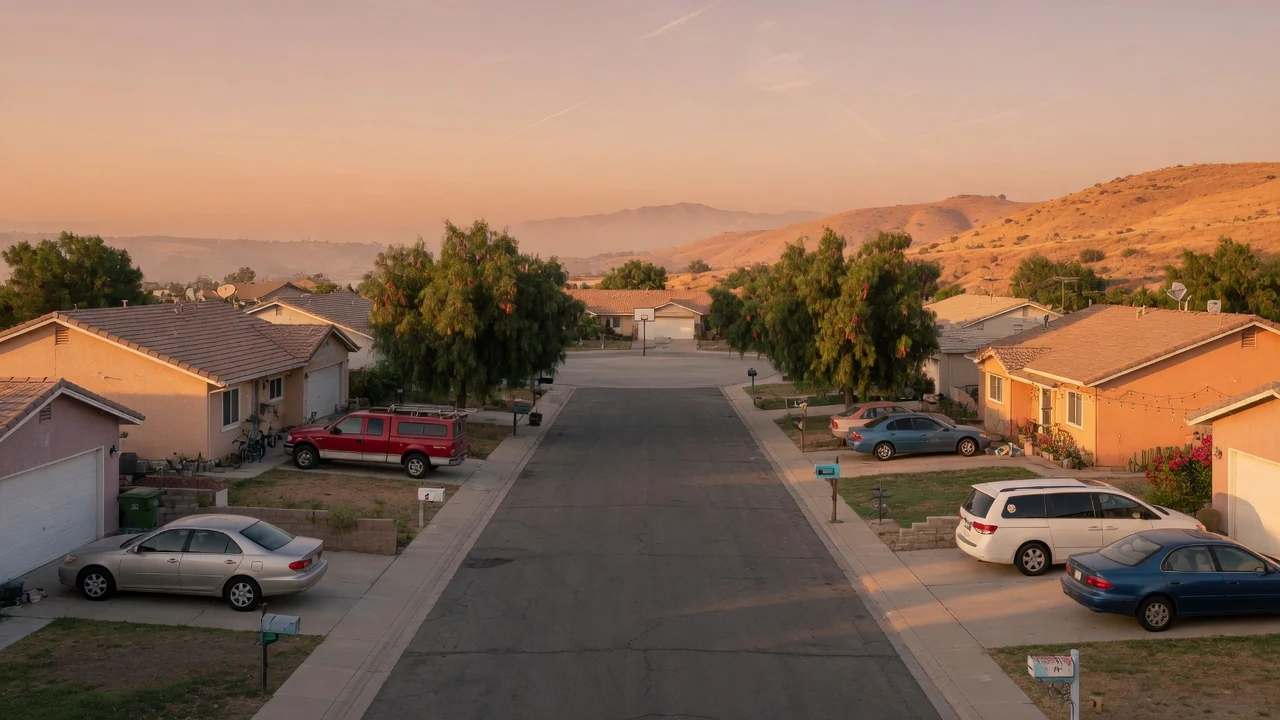
What homes around here are actually worth right now
It helps to know the ground you are standing on. These are Zillow's Home Value Index figures for the middle third of the market, smoothed and seasonally adjusted, as of 30 June 2026, with the same month a year earlier beside them. It is a typical-value index rather than a record of what any house sold for, which is why it is useful as background and useless as your number.
| City | Typical value, June 2026 | A year earlier | Year over year |
|---|---|---|---|
| Temecula | $766,780 | $776,115 | −1.2% |
| Corona | $762,689 | $769,873 | −0.9% |
| Murrieta | $691,252 | $698,967 | −1.1% |
| Wildomar | $658,731 | $662,441 | −0.6% |
| Riverside | $648,360 | $651,644 | −0.5% |
| Menifee | $586,781 | $593,296 | −1.1% |
| Lake Elsinore | $586,307 | $590,878 | −0.8% |
| Perris | $544,654 | $543,954 | +0.1% |
| Hemet | $445,921 | $446,188 | −0.1% |
Eight of the nine drifted down over the year, none by much. That matters for one decision. Waiting for the market to rescue your number has not paid here lately, so holding a house you do not want in hope of a better spring is currently costing you carrying costs and buying you no appreciation.
The county's number is the one that surprises people
California assessed value does not track the market, and it is not supposed to. Revenue and Taxation Code section 110.1 sets your "full cash value" as the fair market value on the date you bought the place, or built on it, or otherwise took ownership. That figure becomes your base year value. Section 51 then compounds it annually by an inflation factor that, in its own words, may not exceed 2 percent of the prior year's value.
So if you bought in Murrieta in 2004 and never moved, the number the county has been taxing you on is close to what you paid two decades ago, adjusted by small annual steps. It is a useful number for one purpose and misleading for every other. A low assessed value says nothing whatsoever about what your house would sell for.

The online estimate prices a house it has never entered
An automated estimate is a model reading records and recent sales nearby. That is a reasonable way to get a bracket, and for a well kept home in the middle of its street it often gets close. What it cannot do is see. It does not know about the roof, the slab, the kitchen that was last touched in 1998, or the bathroom that has been out of use since spring.
So for a house that needs work, the estimate is quietly describing a repaired version of your home. That gap is not the model being wrong, it is the model being asked a question it cannot answer, and it is almost always the source of the disappointment when a real offer arrives.
There are two honest answers to what a buyer will pay
The first is what the house fetches listed on the open market: repaired, cleaned, photographed, shown for weeks, and sold to a financed buyer. That is usually the highest number available to you, and our guide to what it costs to sell a house in Temecula sets out what has to come back out of it.
The second is what someone pays for it exactly as it stands today, with no repairs, no showings, and a closing date you choose. That number is lower, and the difference buys you the repairs you do not make, the months you do not wait, and the financing that cannot fall through. Which is better is a real question with a real answer, and it depends on your house and your calendar rather than anybody's opinion.
Frequently Asked Questions
Do the four numbers work the same way in Orange County and San Diego County as in Riverside County?
Yes. The assessed value is set the same way statewide, pinned to what you paid and adjusted under the Revenue and Taxation Code rules this guide cites, so it behaves the same whether the assessor is Riverside County's, San Diego County's, or Orange County's. Online estimates and appraisals are the same instruments everywhere.
What changes is the price level they work with. Zillow's Home Value Index put a typical Temecula house near $769,000 and a typical Huntington Beach house near $1.37 million as of July 2026, so the gap between an online estimate and what a buyer will actually pay is measured in larger dollars along the coast, even when the percentage is the same.
Why is the county's value so much lower than the online estimate?
Because it is pinned to when you bought. Under Revenue and Taxation Code sections 110.1 and 51, your base year value is the market value at your purchase date, and it can only be adjusted upward by an inflation factor capped at 2 percent a year. Two decades of a rising market do not appear in it. That is Proposition 13 working exactly as designed, not an error on your bill.
Should I pay for an appraisal before I sell?
Usually not. An appraisal is commissioned by a lender to protect a specific loan on a specific date, and a seller ordering one privately gets an opinion no buyer is obliged to accept. If your goal is a real number rather than a document, a walkthrough and an actual offer tell you more and cost nothing.
Does a house in poor condition still have a market value?
Yes, always. Condition changes who the buyer is rather than whether one exists. Most financed buyers need a home that will satisfy their lender, which narrows the field on a house that needs real work. Cash buyers do not have that constraint, which is why they are often the ones still standing on a property that would struggle on the open market.
About home valuation in California
- California Revenue and Taxation Code section 110.1, how full cash value and the base year value are set
- California Revenue and Taxation Code section 51, the annual inflation factor and the 2 percent ceiling
- Riverside County Assessor County Clerk Recorder, your assessed value and property records
- Zillow Home Value Index research data, the published city level series the table above is drawn from
- Get a no obligation cash offer on the house as it stands today, which is the one number that turns into money
Sources: California Revenue and Taxation Code 110.1, California Revenue and Taxation Code 51, Zillow Home Value Index, city series, June 2026