An empty house in pre-foreclosure draws attention that an occupied one does not, and several Southern California cities have written that risk directly into their municipal codes. If the property is vacant, someone has an affirmative legal duty to say so and to keep it up, on a deadline measured in days. The table lists what three service-area jurisdictions actually require.
| Jurisdiction | Registration deadline | Who has to register |
|---|---|---|
| City of Temecula | Within 30 days of the property being found vacant, renewed annually | The beneficiary or trustee of the deed of trust, per Chapter 8.44 |
| City of Murrieta | Within 10 days of an inspection finding it vacant | The beneficiary or trustee, registered with the chief of police, per Chapter 8.44 |
| Riverside County (unincorporated) | Set by Ordinance 881 | Any party with a recorded interest once a Notice of Default or Notice of Trustee's Sale is on file |
| City of San Diego | Set by its Abandoned Properties Ordinance | Beneficiaries and trustees of qualifying loans |
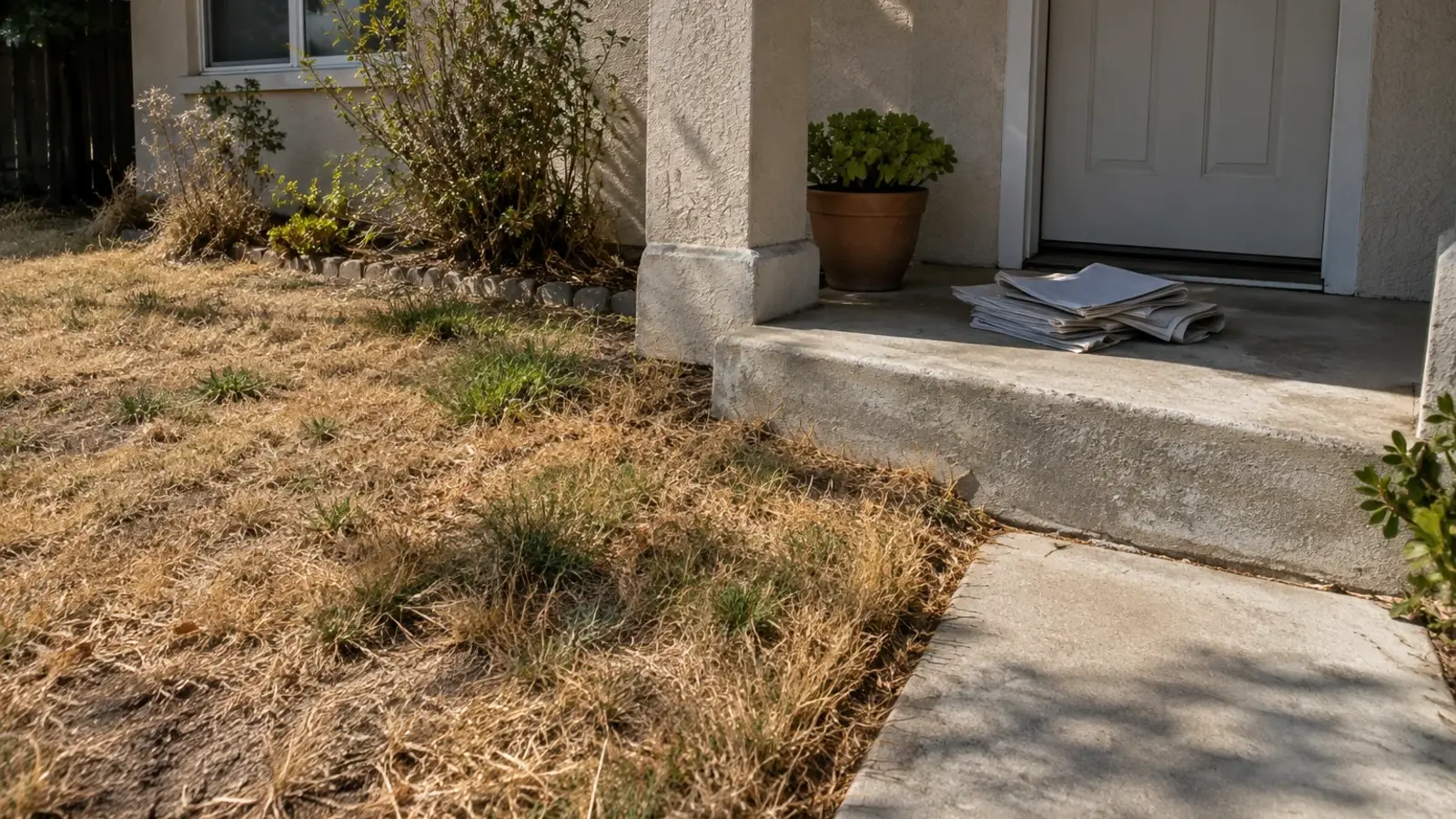
Every one of these ordinances exists because an empty house left unattended is genuinely riskier: dry landscaping is a fire hazard, an unsecured door or window invites vandalism and squatting, and a lapsed insurance policy can leave nobody covered when something goes wrong. The registration and maintenance duties are the city's way of making sure somebody with an interest in the property is accountable for it while a foreclosure works through the calendar.
The obligation generally falls on the lender's side once a Notice of Default is recorded, but the underlying owner still has real exposure: an insurance policy written for an occupied residence can be voided or limited once the house sits vacant, often after 30 or 60 days depending on the policy's own vacancy clause, which is a separate problem from the city's registration rule.
What "vacant" actually triggers
Temecula's ordinance treats a property as abandoned once it is found vacant or shows evidence of vacancy after the trustor defaults, and requires the beneficiary or trustee to register it with the city's Building and Safety department within 30 days, updating any change and renewing every year. Murrieta runs on a tighter 10 day window and routes registration through the police department instead. Both cities require the registrant to keep the yard free of weeds, dry brush, and debris, keep any pool or spa fenced to code, and maintain the structure so it does not itself become the nuisance a neighbor complains about.
"The beneficiary or trustee of the property must fill out the Abandoned Residential Property Registration Form...within 30 days."
City of Temecula, in Abandoned Properties (Residential)

What a vacant property registration typically requires
| Requirement | What it means in practice |
|---|---|
| Landscaping maintenance | Regular watering, mowing, and removal of dead vegetation and debris |
| Pool and spa security | A fence meeting Building Code height and self-latching gate standards |
| Structural security | Doors and windows secured against unauthorized entry |
| A local contact | A property management contact able to respond within a set time to code complaints or emergencies |
| Annual renewal and fee | Continued vacancy has to be re-registered; check the current city fee schedule |
Riverside County's Ordinance 881 applies the same logic countywide to unincorporated territory: any residential property that is vacant and carries a current Notice of Default, Notice of Trustee's Sale, pending tax lien sale, or has already transferred to the lender through foreclosure or a deed in lieu is required to register.
The insurance problem a city ordinance does not solve
A standard homeowner's policy is written for an occupied residence, and most carry a vacancy clause that limits or excludes coverage once the house sits empty for a defined stretch, commonly 30 to 60 days. Vandalism, theft, and water damage are the claims most often affected. If you have already moved out while a sale is pending, calling the insurer to ask about a vacant property endorsement is worth doing before, not after, something happens.
Keeping a vacant house from becoming the next violation
| Do this | Why |
|---|---|
| Keep a working light on a timer and check the property regularly, or arrange for someone to | An obviously occupied-looking house draws less attention from both vandals and code enforcement |
| Maintain the landscaping even after moving | Dead vegetation is the single most common trigger for a vacancy inspection |
| Ask your insurer about a vacant property endorsement | A standard policy's vacancy clause can leave you uncovered exactly when something happens |
| Confirm whether your city or county requires registration | Temecula, Murrieta, and Riverside County all have separate rules; a call to code enforcement settles it in minutes |
| Sell before the house sits empty for months | Removes the registration duty, the insurance gap, and the vandalism risk at once |
Selling before the house sits empty
The cheapest way to avoid a vacancy registration, a lapsed insurance claim, and a code enforcement complaint is to not let the house sit vacant at all. We buy houses as-is for cash across Southern California, from the Temecula Valley and Riverside County to Orange County and North County San Diego, whether the house is occupied, already vacant, or somewhere in between. Get a no-obligation cash offer and close before an empty house becomes its own liability.
Frequently Asked Questions
Does my city require a vacant property registration in Riverside, Orange, or San Diego County?
It depends on the specific city. Temecula's Chapter 8.44 requires registration within 30 days of a property being found vacant during default; Murrieta requires it within 10 days, filed with the police department; unincorporated Riverside County applies Ordinance 881 the same way; and the City of San Diego has its own Abandoned Properties Ordinance. Not every Orange County or San Diego County city has adopted one, so the honest answer is to call that specific city's code enforcement or building and safety department and ask directly.
Who is responsible for registering the property, me or the lender?
Under Temecula's and Murrieta's ordinances, and Riverside County's Ordinance 881, the duty generally falls on the beneficiary or trustee of the deed of trust once a Notice of Default is recorded and the property is found vacant. That does not remove your own exposure as the owner of record for insurance lapses, maintenance neglect a neighbor reports before any inspection occurs, or liability if someone is hurt on an unsecured property.
Will my homeowner's insurance still cover a vacant house?
Often not in full. Most standard policies include a vacancy clause that limits or excludes coverage, commonly after 30 to 60 days of vacancy, particularly for vandalism, theft, and some water damage claims. Ask your insurer directly whether a vacant property endorsement is available and what it costs before the house sits empty long enough for the standard clause to apply.
What happens if the property is not registered when it should be?
Cities that require registration also enforce it, typically through their standard code enforcement process, which can include fines for noncompliance in addition to any separate penalty for the underlying maintenance violations. The specific fee and fine schedule is set by each city's own ordinance and fee resolution, so checking directly with Temecula's Building and Safety department, Murrieta's police department, or the relevant county office gives the current figures rather than a number that may already be out of date.
About Vacant Homes in Pre-Foreclosure in California
- City of Temecula, Abandoned Properties Registration
- City of Murrieta Municipal Code 8.44, Registration
- Riverside County Code Enforcement, Ordinance 881 FAQs
- HUD, free housing counseling
Sources: City of Temecula, Abandoned Properties Registration, City of Murrieta Municipal Code 8.44, Riverside County Ordinance 881 FAQs, HUD